
Preparation. Performance. Personality.
No one wants to sit through another “this could have been an email” meeting. But when done right, meetings can connect, amplify, and propel your team forward in ways email never will. Here’s how to run one that is worth your time.
The Real Purpose of a Team Meeting
If you’re going to ask people to step away from their work and gather in real-time, it should accomplish five things:
- Connect – Create human connection in the room.
- Reaffirm – Remind everyone why you’re here and what you’re building together.
- Learn – Deliver something new—an insight, update, direction, or tool.
- Amplify – Build energy by bringing aligned people together and letting that energy multiply.
- Clarify – Leave no one guessing about what just happened or what happens next.
Meetings build momentum. It’s more energy work than agenda items.
Treat It Like a Performance
If you’re leading, you’re performing. Not in a fake, over-the-top way, but in the way that says: “I’ve prepared. I’m leading this moment. I’m commanding the energy in the room.” And yes, you should feel tired after a great meeting. You’ve held the energy, controlled the narrative, and carried the room forward.
Pro tip: Don’t schedule anything big the day after a major meeting or training. You will have left your meeting attendees energized but you will need recovery time.
Structuring Meeting Flow
Think of it like a story arc:
- Background – Reconnect with why you’re here.
- New Information – Bring something fresh to the group.
- Conflict or Challenge – Surface the tension or decision.
- Resolution/Plan – Name the path forward.
- Future Casting – Cast vision for what’s next.
Make space for participation. Bring in others like guest stars in your show. Let them share, present, or reflect back what they heard.
Use callbacks to build trust and keep people engaged: “Remember when Sam said XYZ earlier? That’s exactly what we are working toward.”
Team meetings are going to amplify what’s already there. So when you’re building a business of alignment, you’ll be able to capitalize on major trust-building and energy-moving in real-time.
Holding space for Participation
Don’t let a few voices dominate the room. Make everyone participate—yes, even the quiet ones (they sometimes have the best takes).
Simple check-ins like:
- “What’s one thing you heard that you didn’t know before?”
- “What’s one thing you’re most excited or curious about?”
Go around the room. Hold the space. Even if it’s a little awkward. Make it known that everyone’s voice matters. And when people start pre-highlighting their own takeaways because they know you’ll ask? That’s when you know you’ve created a culture of engagement.
When Not to Have a Meeting
Let’s check ourselves.
Here’s the rule:
If you’re just transferring information—skip the meeting.
If all you’re doing is handing someone something they could have read on their own,
send an email.
If you’re not adding color, context, or collaboration—
send an email.
If you’ve already had a meeting on the topic—
send an email.
And if you’re just looking for validation of your own work—
send an email (or call your mom—she’ll tell you how great you are).
But if the topic has emotion, conflict, or energy that deserves to come alive in the room—
make it a meeting.
Give it space to breathe.
Give it your full presence.
And lead it like the performance your team deserves.
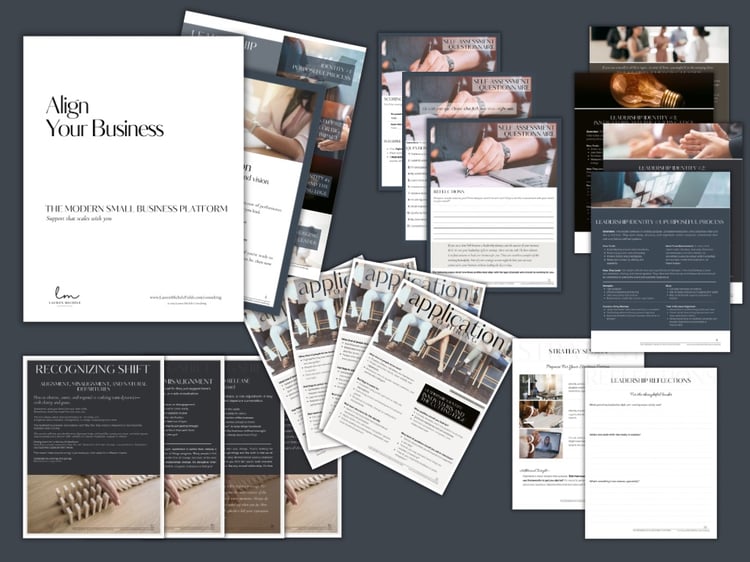
Align Your Business is your first step for leadership, growth, and goals. Identify cracks, self-assess your own style, see what’s working so you can build more of it. Part self-guided, part 1:1, this program works at any stage of business.
Read more articles from The Shift
 Lauren Michele Fields
Leave a comment